
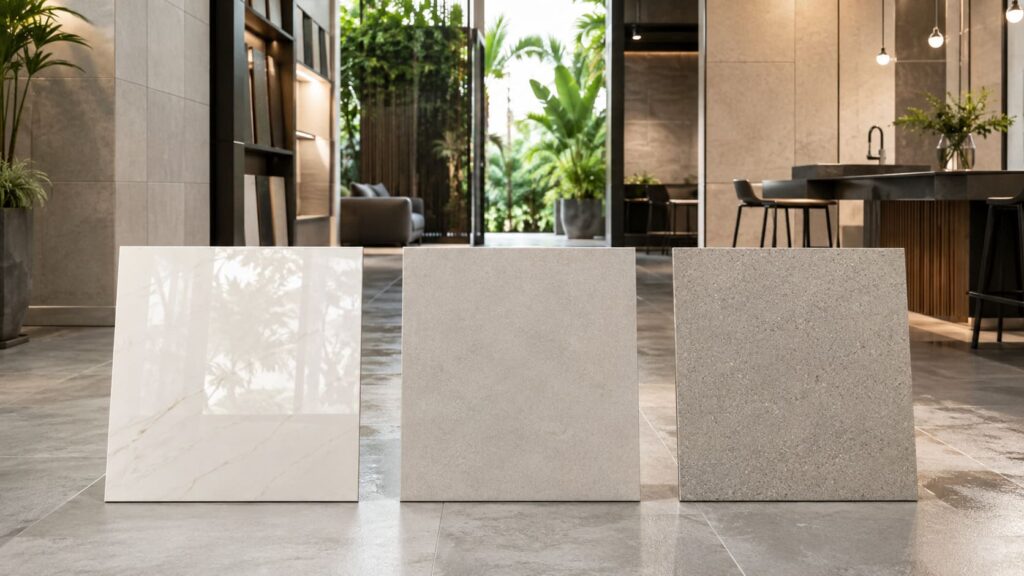
For humid Malaysian conditions, porcelain and homogeneous tiles are often selected for wet zones and high traffic floors of confominiums because they are generally engineered for lower water absorption than standard ceramic options, while ceramic tiles can still be a practical choice for many interior walls and light duty spaces when specified correctly. The real risk is not the tile category itself, but choosing a finish, rating, and installation system that does not match the space.
At OTMGroup, we help project teams and homeowners compare tile performance using manufacturer data such as water absorption, wear ratings, slip resistance, and maintenance needs, so you can reduce rework, control lifecycle cost, and keep designs aligned with budgets.
Understanding Ceramic, Porcelain, and Homogeneous Tiles
Ceramic Tiles
Ceramic tiles are commonly used for walls and for floors with lighter traffic. Many ceramic products use a glazed surface, which can support stain resistance and design variety. The tradeoff is that performance varies widely by product, so it is worth checking water absorption, wear rating, and the intended application printed on the box or technical sheet.
Porcelain Tiles
Porcelain tiles are typically manufactured to be denser than standard ceramic tiles. That density often translates into lower water absorption and better suitability for humid interiors, wet areas, and busy floors, depending on the finish and rating. Porcelain is frequently specified where you want a consistent look across living areas, corridors, and commercial spaces.
Homogeneous Tiles
Homogeneous tiles are generally full body tiles where the material composition runs through the tile body. They are commonly considered for demanding floors because surface wear is less likely to visually differ from the body. As with any tile type, you may still need to confirm slip resistance, chemical exposure tolerance, and cleaning expectations for the actual site.
Compare Water Absorption for Malaysia’s Humid Conditions
Malaysia’s frequent wet conditions, heavy rainfall and routine wet cleaning make moisture management particularly important for tiled surfaces. Water absorption matters because it can influence how a tile behaves when exposed to moisture over time, including the risk of staining, damp related discoloration, and stress at tile edges if conditions fluctuate. Manufacturer test data is the safest way to compare products across brands and series.
In practical specification work, we usually advise separating spaces into moisture zones:
- Constant wet zones such as showers, pool decks, and some industrial washdown areas
- Intermittent wet zones such as bathrooms, kitchens, balconies, and covered walkways
- Dry zones such as bedrooms, offices, and most living rooms
For wet zones, lower water absorption tiles are commonly preferred, but success still depends on the full system, including correct adhesive selection, movement joints, and grout choice.
Check PEI Ratings for Different Traffic Levels
PEI rating is a practical reference point for glazed tile wear performance, especially where rolling loads, abrasive dirt, and frequent foot traffic are expected. For Malaysian projects, we recommend matching the rating to how the space is actually used, not how it is labeled on the plan.
| Project Type | Traffic & Wear Considerations |
|---|---|
| Condominiums | Living areas may handle moderate daily traffic, while corridors and lobbies see heavier, more abrasive use |
| Landed Homes | Entryways and kitchens typically need better wear resistance than bedrooms |
| Shopping Malls | High and continuous traffic calls for higher wear resistance and a surface that keeps its appearance under frequent cleaning |
| Industrial Spaces | Consider point loads, pallet traffic, and the possibility of grit, oils, or chemicals, then confirm suitability with the manufacturer data |
For unglazed or full body products, ask for the relevant abrasion and maintenance guidance, since PEI is not always the primary measure for every surface type.
Consider Slip Resistance for Wet Areas
Slip resistance should be treated as a safety requirement, not a design preference. Wet feet, cleaning water, condensation, and tracked in rainwater can turn the wrong surface into a hazard, particularly at bathrooms, poolside zones, ramps, and commercial entrances.
Instead of selecting by appearance alone, we suggest confirming that the tile finish is stated as suitable for wet areas, and reviewing the published slip resistance rating method used for that product. Textured and matte finishes may provide greater grip than highly polished surfaces but the manufacturer’s tested slip resistance should guide selection.
Match Wall and Floor Tiles to Their Intended Application
A good selection process considers performance first, then appearance. This is especially true when you are coordinating wall and floor tiles across multiple zones and elevations, where moisture exposure and cleaning intensity can change room by room.
| Project Type | Recommended Focus | Common Specification Notes |
|---|---|---|
| Condominiums | Slip resistance for bathrooms, wear resistance for corridors | Confirm water absorption for wet zones, use consistent grout color across connected spaces |
| Landed Homes | Comfort and maintenance for family use | Consider thermal feel underfoot, select stain resistant surfaces for kitchens and outdoor connected areas |
| Shopping Malls | Durability under high traffic and frequent cleaning | Confirm wear performance and cleaning compatibility, specify slip resistance at entrances |
| Industrial Spaces | Load conditions and exposure to dirt, oils, and washdowns | Confirm resistance expectations with product data, plan grout and joint details for movement and cleaning |
Grout considerations are often where projects succeed or fail. Joint width, grout type, and cleaning regime affect stain pickup and water ingress. In wet areas, using an appropriate grout and detailing movement joints helps reduce cracking and debonding risks. Always align selections with applicable building requirements for wet area safety and workmanship, and document your tile rating and finish decisions in the specification.
Floor Tiles Price Malaysia: What Affects the Cost?
Comparing floor tiles price in Malaysia is useful for early budgeting, but unit price alone rarely reflects true project cost. Ceramic can be cost effective for many walls and light duty floors. Porcelain and homogeneous options may be priced higher, yet can reduce replacement risk in demanding areas if the performance matches the site conditions.
For clearer procurement decisions, we recommend a simple technical framework:
- Confirm intended use: wall only, light residential floor, commercial floor, or industrial floor
- Review key data: water absorption, wear rating or abrasion guidance, slip resistance for wet areas, stain resistance notes, and cleaning compatibility
- Budget the full system: trims, skirting details, adhesives, grout, waterproofing in wet zones, wastage allowance, and lead time
This approach keeps design intent intact while helping procurement teams compare like for like across brands and series.
Which Floor Tile Type Should You Choose in Malaysia?
If your project includes wet areas or heavy traffic, start with performance requirements, then shortlist finishes and colors that meet them. For many residential walls and lighter duty floors, ceramic may fit. For humid zones, busy corridors, and commercial applications, porcelain or homogeneous tiles are often easier to justify because they tend to be selected for denser performance profiles, provided the slip resistance and wear expectations are documented.
At OTM Group, we support Malaysian projects by helping you interpret technical sheets, align selections to room by room requirements, and coordinate supply planning for staged deliveries. If you already have drawings and a finish schedule, we can help you validate the specification before ordering.
Request a quote and specification review from OTM Group so we can recommend suitable tile types and finishes based on your project requirements and timeline.
